HOW IT WORKS / YOUR SHIPMENT
From enquiry
to booking confirmation.
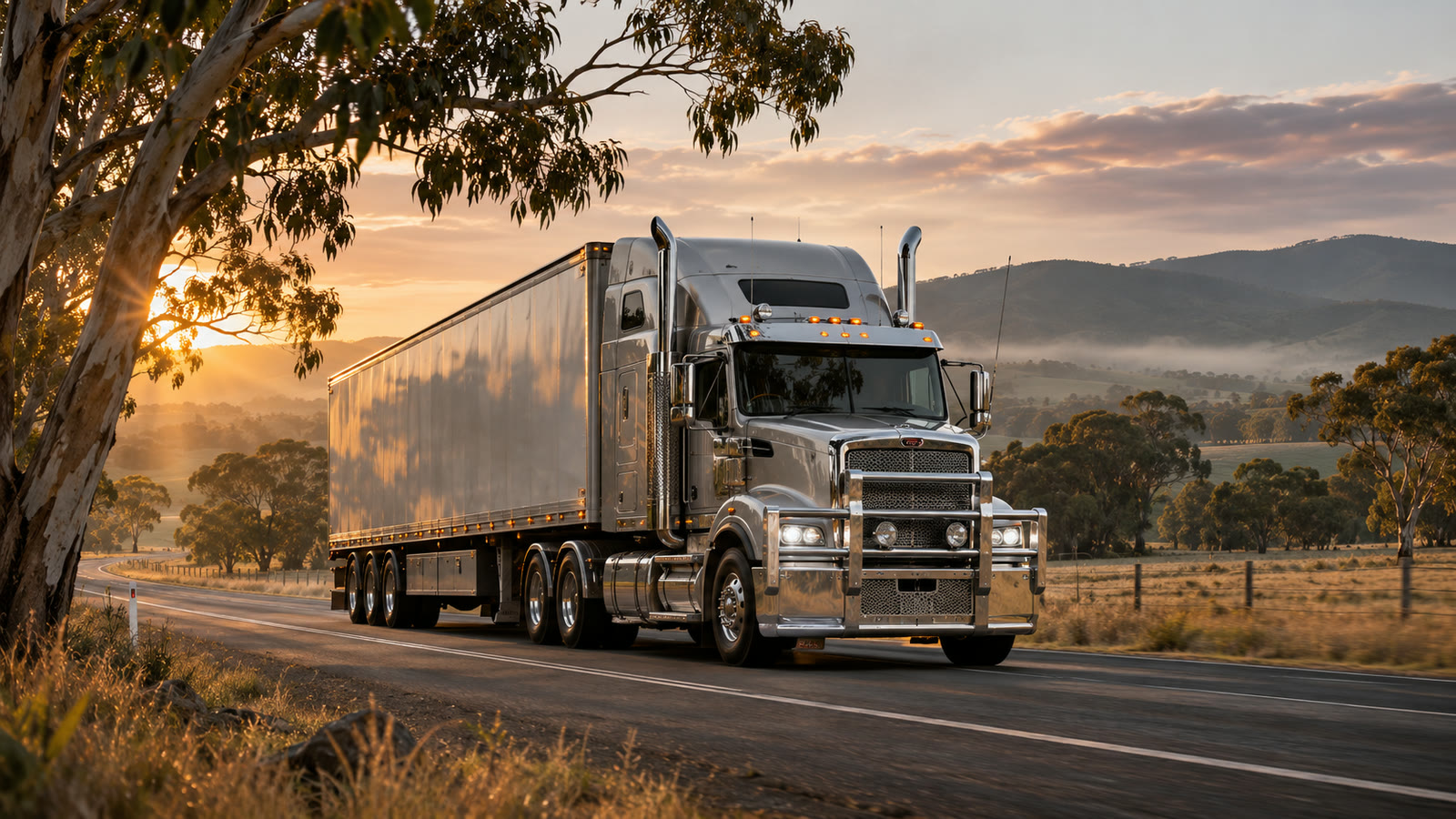
We clarify your shipment details, request written quotes from relevant carriers and email you a comparison. You choose a current bookable quote. We immediately introduce you and the carrier by booking confirmation email. The carrier arranges the transport and invoices you directly.
Find the step you need
Preparing a new shipment
- Enquiry, quotes and booking confirmation ↓
- How is the brokerage paid? ↓
- Who arranges packing and loading? ↓
- Who contracts, invoices and performs transport? ↓
Already have a carrier booking?
Use the booked carrier’s contact channel and booking reference. A new enquiry does not notify the carrier or change a booking.
Already filling in an enquiry? Return to your original enquiry tab to continue. This button starts a new enquiry and does not carry over your details or selected file.
Start a freight enquiry ↗Still checking dimensions? Start with what you know. An enquiry is not a booking.
YOU → BROKERAGE
Describe the shipment
Share the pickup and delivery suburbs, what needs moving and your reply details. Add dates, measurements or photos if you have them. Label estimates and unknowns.
BROKERAGE ↔ YOU
Clarify before requesting quotes
We follow up on packed dimensions, weight, condition, access and loading arrangements. Before sharing the necessary shipment details with relevant carriers, we confirm the information and your permission. The carrier assesses suitability.
CARRIERS → BROKERAGE → YOU
Review written carrier quotes
Each carrier sets its own price and terms. We identify the named carrier and compare the scope, dates, GST, surcharges, unloading, exclusions and quote expiry. The number of options depends on the route, load and availability; multiple quotes are not guaranteed.
YOU → BROKERAGE → CARRIER
Choose your quote and receive your booking reference
We check that the carrier’s written quote is ready to book. When you select it within its validity period for the agreed shipment, we immediately email you and the carrier together to confirm the booking and share your reference.
If the load, dates or access change before booking, tell us. After booking, raise changes directly with the carrier using your booking reference. The carrier needs to reassess any material change and confirm revised pricing or arrangements before you proceed.
CARRIER ↔ YOU
Transport and direct billing
Your transport contract and freight invoice are directly with the selected carrier. Check its payment terms, cancellation conditions, cover and claims process before accepting. The brokerage does not collect your freight payment.
The carrier handles transport and transport-related issues. Raise delays, damage or invoice questions with the carrier using your booking reference. A quote is not a guarantee of delivery timing or insurance cover.
Receiver requests a new delivery slot? Confirm the revised arrangement ↗
Need to cancel before collection? Request and confirm with the carrier ↗
Different operator proposed? Clarify the carrier and transport roles ↗
Collection not completed? Check the existing-booking handoff ↗
Depot collection proposed? Check the quoted legs and release requirements ↗
Receiver, signature or proof of delivery? Confirm the arrangement ↗
Only part of the booked load arrived? Check the item-by-item handoff ↗
Missing or damaged freight? Find the carrier handoff ↗
Later measurement-based invoice charge? Prepare an evidence request ↗
BROKERAGE REMUNERATION
How the brokerage is paid
Under our proposed model, we agree a referral fee with the carrier before it quotes. As soon as we send the booking confirmation, we invoice the carrier separately for that fee. The carrier independently decides its quoted price. A referral fee may affect that price, so compare the complete written offer and terms.
We do not promise the lowest market price or compare every carrier.
CARRIER IDENTITY / CHECK THE WRITTEN ARRANGEMENT
Who contracts, invoices and performs the transport?
Before selecting a quote, ask the named carrier to identify the business you would contract with, the business issuing the freight invoice and the operator proposed to perform collection and delivery. Ask whether subcontractors or other operators are proposed for any leg. A different vehicle name alone does not explain the arrangement.
- Match the written offer
- Keep the carrier’s business name, quote reference and current scope together. Ask it to explain any different business named on the booking, transport documents or invoice and to identify the booking and issue-reporting contacts.
- If another operator is proposed
- Ask the selected carrier which legs and tasks that operator would perform, who coordinates collection and delivery, and whether equipment, access, timing, price or terms would change. Keep unconfirmed details marked unknown. Ask for the relevant written terms and confirmation; do not assume either that substitution is unrestricted or that a different operator automatically creates a new contract.
- If you already have a booking
- Contact the booked carrier through its existing booking channel with your reference. Ask it to clarify the proposed operator and confirm any revised arrangements in writing, then check relevant access and receiving details with the site contacts. A new enquiry does not approve a change or notify the carrier.
A name change needs clarification
Fictional clarification request: “Booking B-416 names Carrier A. A message now names Operator B for collection; its role and delivery operator are unknown. Please identify the contracting and invoicing businesses, who would perform each leg, the booking contact, and whether the accepted scope, equipment, timing, price or terms would change. Please provide the written arrangement and explain what response you need from us.” These names and events are invented; this request does not authorise a change.
Confirm the current arrangement with the carrier rather than inferring it from branding. This checklist does not determine contractual rights or liability. For a separate new shipment, start a freight enquiry. Already completing an enquiry? Return to its original tab to retain your entries and selected file.
BEFORE COLLECTION / AGREE THE SCOPE
Who arranges packing and loading?
Tell us what is ready and what still needs arranging. Our proposed service is to clarify the request, compare written carrier quotes and facilitate your selection. Packing, crating, dismantling and loading assistance need their own explicit arrangement; a freight enquiry does not arrange those tasks.
- Packing and crating
- Identify who will prepare the goods and confirm the final packed dimensions and gross weight. If no one is arranged, say so. Ask whether a proposed service includes preparation, who performs it and what it costs; do not assume the quoting carrier provides it.
- Loading at pickup
- Describe the available equipment and who is expected to operate it. If assistance is needed, ask the carrier to assess the load and site and confirm the method, provider and charges in writing.
- Unloading at delivery
- Check separately with the receiver. Equipment at pickup does not establish an unloading arrangement at delivery. Tell us if equipment, access or responsibility is unknown.
Purchaser arranging collection from a dealer? Separate requester, release and receiving roles ↗
What to write when the crate is not ready
Fictional enquiry: “One industrial pump; crate not built. Packing provider not arranged, final packed size and gross weight unknown. Pickup forklift reported available; operator to confirm. Delivery equipment unknown. Please clarify which preparation and loading tasks would be included or need arranging separately.”
Put this in the shipment description or optional measurements and access field. You can enquire with unknowns. Confirm preparation responsibilities, final load details, access and the written service scope before selecting a quote. We email your booking reference as soon as you choose a current bookable quote. This is an information checklist, not packing, lifting or restraint instructions.
COLLECTION NOT COMPLETED / EXISTING BOOKING
What if the carrier could not collect?
If a booked collection was not completed, contact the selected carrier through its booking channel with your booking reference. Explain what happened and what is still unconfirmed. A new quote enquiry does not notify that carrier, cancel the booking or arrange another attempt.
- Describe the attempt
- Give the attempted collection date, the affected load and what the pickup contact reported: for example, goods not ready, access unavailable or loading arrangements unresolved. Mark an unconfirmed reason as unknown; do not infer fault.
- Check readiness and the next arrangement
- Identify what needs to change, who is checking it and any proposed new ready date. Ask the carrier to reassess the load, access, loading and timing and confirm whether the existing booking is being rescheduled or cancelled. A requested new date is not a confirmed collection.
- Clarify charges separately
- Ask the carrier to identify any waiting, unsuccessful-collection, cancellation or repeat-attempt charge, its applicable quote or term and the written amount including GST. Do not assume another attempt is free or that the original price covers it. If a charge is disputed, use the invoice evidence request.
A failed attempt is not a new booking
Fictional handoff: “Booking B-314: collection was not completed on 24 November. The pickup contact reports the crate was not ready; other causes are unconfirmed. Packing completion is being checked and 26 November is only a proposed ready date. Please confirm the booking status, any applicable charges and what needs confirming before another attempt.” The reference and events are invented.
Keep the carrier’s response with the booking and wait for its written confirmation of revised scope, charges and timing. If this is a separate new shipment, start a new freight enquiry; if you are already completing an enquiry, return to its original tab to retain your entries and selected file.
BEFORE BOOKING / RECEIVING AND RECORDS
Who receives the freight, and what delivery record can I get?
Confirm the receiving arrangement with the receiver and proposed carrier before choosing a quote. A site address or requested delivery slot does not establish who will be present, whether a signature is required or what record the carrier will provide.
- Receiver and signature
- Ask the receiver who will be available during the proposed window. Ask the carrier whether the quoted service requires an authorised recipient, what happens if nobody is available, and whether waiting, redelivery or storage charges may apply. Confirm the arrangement and applicable charges including GST in writing.
- A request to leave freight unattended
- Tell the carrier if the receiver is proposing unattended delivery. Ask whether it is available for this load and site, what authorisation and conditions it requires, and how the delivery record and liability terms would differ. Do not treat a receiver’s request, a note in an enquiry or silence from the carrier as agreed permission to leave freight. Resolve the arrangement with the carrier before treating it as confirmed.
- Proof of delivery
- Ask what proof of delivery (POD) or other delivery record is available, whether it includes a signature or another form of evidence, who can request it, when it becomes available and whether there is a charge. Ask how to obtain it using the booking reference. Do not assume a tracking update includes a signed receipt.
What to ask when the receiver may be absent
Fictional enquiry: “One crated pump to a workshop. The receiver may be absent during the proposed window; no unattended arrangement is agreed. Please confirm the receiving requirements, what happens if nobody is available, any applicable charges, and which delivery record we can request and when.” This describes an unresolved question, not an instruction to deliver or leave goods.
For an existing booking, contact the booked carrier with its reference to clarify the agreed receiving arrangement or request a delivery record. A missing signature alone does not resolve what happened; ask the carrier to explain the available evidence. If goods are missing or damaged, use the carrier’s issue-reporting procedure and ask about its time limits. Requesting POD does not itself lodge a claim.
Already completing an enquiry? Return to its original tab to keep your entries and selected file. For a separate shipment, start a new freight enquiry; this local form cannot change a booked delivery or request POD from a carrier.
AFTER BOOKING / CONTACT THE CARRIER
Missing or damaged freight, or a charge question?
Use the selected carrier’s reporting channel for a transport issue. Tell it which booking is affected and ask for its procedure, required evidence and applicable time limits promptly.
- An invoice or measurement question
- Identify the invoice and disputed charge, and keep the accepted quote and revisions. Ask the billing carrier for the measurement record, applicable rate or term and calculation. Use the worked invoice evidence request ↗
- Missing or damaged freight
- Identify the booking, affected unit labels or quantities, what was expected and what was received, and when the issue was noticed. Keep the relevant delivery record, correspondence and any existing photos together. Describe what you observed and mark the cause or extent unknown where it is unconfirmed. Ask the carrier how to submit its report or claim and what else it needs.
- Both issues on one shipment
- Explain both issues to the carrier and ask whether it needs separate reports. Keep any report references linked to the booking and invoice. An invoice query does not itself lodge a loss or damage claim.
Only part of the booked load arrived?
For an existing booking, contact the booked carrier using its booking reference and issue-reporting channel. A new freight enquiry does not notify that carrier or arrange the outstanding delivery.
- Compare the item lists. Keep the accepted load description and any confirmed revisions. List the item labels and quantities expected, what the receiver reports received, and which items remain unaccounted for. If an item cannot be identified, mark it unknown.
- Attribute each report. Keep who supplied the information, when the arrival was reported to have happened and when you received the report. If the carrier record and receiver disagree, send the exact difference for clarification. A general “delivered” label may not explain which items its record covers; ask for the item scope rather than treating it as confirmation of the whole load.
- Clarify what remains outstanding. Ask the carrier to confirm the status of the remaining items, the next steps, any proposed delivery arrangement and its reference. Distinguish a proposed date from a carrier-confirmed arrangement and check it with the receiver. Keep the original booked scope until any change is explicitly agreed.
Fictional status request: “Booking B-209 covers crates A, B and C. The receiver reports A and B arrived at 10:00 today; their report reached us at 10:20. C has not been located by the receiver. Your record says delivered without item details. Please clarify which items that record covers, C’s status, the issue-report reference and any confirmed next arrangement. The cause and next delivery time are unknown.” These events are invented; an outstanding item is not automatically established as lost.
If a later report corrects the item list, keep the earlier report and explain the correction to the carrier. Ask about its reporting procedure and time limits; this checklist does not determine a claim, payment adjustment or delivery outcome.
Fictional handoff: “Booking B-208 lists crates A and B. The receiver reports crate A received and crate B missing; the cause is unknown. Please confirm the reporting channel, evidence and time limits for this issue and provide a report reference. A separate question concerns a measurement-based charge on INV-309.” These references and events are invented.
The carrier’s terms and process determine the next steps; this guide does not establish cover, liability or a claim outcome. Ask the billing carrier how any report affects payment requirements. Starting a new quote enquiry does not report an issue to the carrier or pause payment.
Returning with another load?
Send the new route, dates and specification, even if the freight looks the same. Previous availability and prices do not confirm a new shipment. You can paste a ready specification into the optional measurements and access field.
Already filling in an enquiry? Return to your original enquiry tab to continue. This button starts a new enquiry and does not carry over your details or selected file.
Start a freight enquiry ↗Machinery · Steel & fabrication · Pallet freight
This local website is a preview. The enquiry form prepares text on your device; it does not send a request or book transport.
Changed details or an expired quote? Follow the revision steps ↗